
Specialty
Contact Us
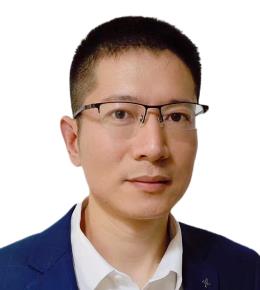
Longwei Wang is an Assistant Professor of Computer Science whose research focuses on explainable machine learning and trustworthy AI, particularly the interplay among AI explainability, robustness, and security. His work focuses on two fundamental challenges in modern AI: the black-box nature of deep learning models and the prevalence of hallucinations and adversarial vulnerabilities in machine learning systems.
His research seeks to bridge the gap between interpretability and robustness by developing machine learning models that are not only understandable to humans but also resilient to adversarial attacks and other sources of uncertainty. Together with his collaborators, he developed Winsor-CAM, an interpretable visual explanation framework for deep neural networks, and has contributed to the theoretical foundations connecting explainability with adversarial robustness. His research also encompasses trustworthy foundation models and explainable AI applications in medical image analysis, materials discovery, and precision agriculture. His work has appeared in leading venues, including ICML, NeurIPS, IEEE Transactions on Pattern Analysis and Machine Intelligence (TPAMI), ICDM, AAAI, the ACM Web Conference, and numerous IEEE journals. His research has received several recognitions, including the Best Paper Award at ISPR 2025 and a NeurIPS 2025 Spotlight Recognition.
As an active member of the research community, he has served as a Special Track and Workshop Chair for the International Conference on Recent Trends in Image Processing and Pattern Recognition and as a Program Committee member for major AI conferences, including ICML, NeurIPS, ICLR, AAAI, IJCAI, WWW, IEEE CAI, and IEEE CogMI. He also serves as an Editor for the journal Symmetry. Dr. Wang regularly serves as a reviewer for high-impact journals such as ACM Transactions on Intelligent Systems and Technology, IEEE Transactions on Artificial Intelligence, IEEE Transactions on Systems, Man, and Cybernetics. He is an IEEE and ACM member.
CSC 488/588 Pattern Recognition and Machine Learning
CSC 525 High Performance Computing
CSC 790 Seminar: Advanced topics in deep learning
CSC 492/592 Internet of Things
Robust and Explainable AI, Trustworthy Deep Learning, Equivariant Deep Learning, Compositional Generalization, Dynamic Routing, Explainable AI for Medical analysis, and XAI for Science
