
Forging a New Road: Alternative Paths to Physicianship

But the road to medicine is not always so direct. With the average age of matriculation in medical school in the United States being 24 years old, more students are straying away from a direct avenue to their M.D. from college, and taking time to forge their own paths.
Some of those students find their road leading to the University of South Dakota’s Sanford School of Medicine. Each in their own path, with their own passions, the SSOM’s non-traditional students bring unique strengths and experiences to the student body that helps the medical school foster physicians with a heart for service and compassion in all things.
AJ Uthe
Class of 2028
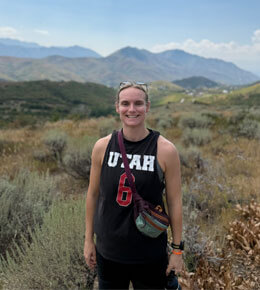
When you first meet AJ Uthe, you might have a challenge finding a skill she doesn’t have. Whether it be snowboarding between college classes in Utah, playing ultimate frisbee or helping audit a multi-billion-dollar business, she seems to have a foot in every door she encounters.
With a B.S. in accounting from the University of Utah and six years of experience as a Certified Public Accountant in Minneapolis and Cleveland, Uthe was confident she knew where her life was going. That was until the COVID-19 pandemic hit in 2020, and her day-to-day experience changed completely.
“I was constantly talking to clients and interacting with my coworkers as an auditor,” she explains. “Going from being around a bunch of people all day to isolation, I began to reflect on what I really wanted to do with my life.”
She realized that in accounting, what truly brought her joy was the people. While going to medical school was always an idea in the back of her mind, she didn’t think it would be possible in this lifetime. But with the prompting of a mentor at her accounting firm, she found herself enrolling in a post-baccalaureate program and taking organic chemistry for the first time.
After surviving her classes, taking the MCAT, and being accepted into the SSOM, Uthe was ready to hit the books. Despite her typical optimism, she found her first few weeks of medical school embroiled in self-doubt, anxiety and imposter syndrome.
“I distinctly remember walking down the stairs to the anatomy lab thinking, ‘I might have to drop out. I don’t know if I can do this,’ and asking myself what the admissions committee saw in me,” Uthe remembers. “Lots of tears were shed that first week.”
In time, the classes became less overwhelming as she familiarized herself with the language and content of medical school. She even found a particular interest in biostatistics and epidemiology, a subject that closely reflected her previous life as an accountant.
When asked about how her past career impacts her future as a physician, Uthe says, “I’m hoping to help bridge the gap between the medical side of health care with the business side of health care. A lot of issues within health care systems arise because of a disconnect between patient care and business.”
Her experience as a CPA helps give her a unique perspective when it comes to problem solving and research. “I like to approach problems with both my ‘business/accountant’ hat and a ‘medical student’ hat,” she laughs. “Plus, it doesn’t hurt to know how to navigate an excel sheet when you’re doing research.”
Uthe knows firsthand that there’s no such thing as “stuck” in life. After making huge life changes, facing imposter syndrome and moving halfway across the country to come home, she can say with confidence that even when things feel scary, they’re almost always worth it.
She’s off to her favorite study spot with a few friends (the Pizza Ranch on the edge of Vermillion), hoping to get a final review of lung cancer before Monday’s quiz. Before she goes, we ask her what advice she’d give to other nontraditional students. She grins and offers one word: “Persist.”
Dela Moradpour
Class of 2028
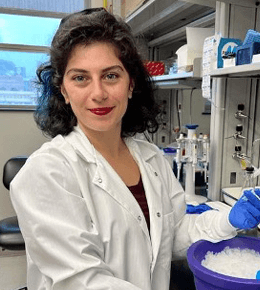
Mention the word “non-traditional” to the Class of 2028, and most minds would immediately gravitate towards Dela Moradpour. Known not just for her unique path to medicine, but also for her numerous adventures and new weekly hobbies, the only thing Moradpour can’t tolerate is a dull moment.
“My classmates call them ‘Dela’s side quests’,” she laughs. “Gardening in different seasons, making lavender oil one week, going mushroom hunting the next. I’m always up for trying something new.”
When meeting Moradpour, there’s a boldness that is undeniable about her demeanor. She comes across as someone who knows what she wants and is unafraid to try new things. Having moved to the United States from Iran, she received her master’s degree in critical theory and creative research at Willamette University in Oregon.
“For several years, I worked at OHSU and other hospitals in the Portland area as a medical interpreter, which gave me invaluable experience listening to patients’ stories and observing the power of communication in medicine,” Moradpour explains. “That role ultimately inspired me to pursue a career as a physician-scientist.”
She completed her pre-medical studies at Blinn Community College in Bryan, Texas, and later transferred to Texas A&M University, where she completed her B.S. in neuroscience.
“Working as a medical interpreter shaped my empathy and curiosity,” Moradpour says, explaining her decision to pursue an M.D. “Listening to patients describe their pain and witnessing their vulnerability gave me a deep sense of compassion, but also frustration at not being able to help them directly. That feeling became the catalyst for my desire to study medicine and pursue translational psychiatric research.”
For Moradpour, the M.D./Ph.D. program was a dream come true, an opportunity to continue honing her skills and passion for research, while still having the opportunity for the patient care aspect she adored as an interpreter.
“The M.D./Ph.D. program felt like the perfect fit,” Moradpour explains, “one that would allow me to pursue translational research to improve treatments for psychiatric illnesses while continuing to form meaningful, long-term connections with patients as a physician.”
When asked about her experience as a non-traditional student, Moradpour argues that it’s actually her biggest strength.
“My previous career and life experiences have given me confidence in connecting with patients and understanding the depth of their struggles,” she says. “I don’t see my path as a detour, it feels like the path I was always meant to take. Non-traditional students bring something special to the field. We carry various experiences, skills and ways of thinking that enrich medicine as a whole.”
Between her love for microscopy and her passion for foil and epee fencing, Moradpour has maintained holistic health care and worked for the underserved as a core tenet of who she is.
“I want to be the type of physician who bridges research and practice with a side interest in addressing structural challenges in health care,” she says. “Coming to medicine later in life has given me clarity of purpose and the freedom to pursue this path unapologetically curious and determined.”
Without a doubt, Moradpour will continue acquiring new skills and testing experiments wherever she goes. As she continues her M.D./Ph.D. training and pursues a future in psychiatry, one thing is certain: her curiosity, compassion and courage to explore new paths will keep shaping the world around her.
Jerrod Fedorchik
Class of 2029
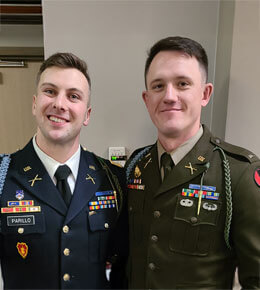
If you were to visit Jerrod Fedorchik, you might discover some unexpected finds in the infantry captain’s home. With poetry scribbled on sticky notes, American flags and a growing mug collection, Fedorchik’s home reflects a life of travel, leadership and loyalty.
“My fiancé, Amanda, and I are working on growing our international Starbucks collection,” he discloses, explaining the multitude of mugs.
Born and raised in western rural Nebraska, Fedorchik says medical school was always on his mind. A seed planted when his high school science teacher, Mr. Jones, ignited a passion for the sciences. Inspired to challenge himself, Fedorchik attended SDSU and acquired a degree in biochemistry. However, his path was complicated by the global pandemic, which resulted in SDSU transitioning to online classes in 2020. With past experiences both as an EMT and a seasonal firefighter, Fedorchik knew this was a key opportunity to give back to his community with the skills he had.
“I increased my involvement in the ambulance, where I was able to serve the local and surrounding communities during this time,” he says. “I have always had a passion for public health, and my service during the pandemic helped build on this passion and understand the necessity of a robust public health program and prevention.”
That same drive to serve his community and country ultimately led him to the U.S. Army. Fedorchik’s military career started with an ROTC scholarship in college, and he eventually achieved the rank of captain in the Infantry. Serving for four years, he was stationed in Fort Lewis before being deployed across the Indo-Pacific region to Korea and Singapore.
“I was the leader, planner and trainer of organizations ranging from 45-750 soldiers, and I oversaw the planning and execution of all training events we conducted on the Peninsula,” he explains. “Leading soldiers and working with Army physicians showed me the importance of holistic health, public health and brilliance in the basics. It also taught me how to balance a more direct leadership style, with a collaborative effort when establishing relationships.”
Having overcome obstacles, such as a 16-hour time difference when interviewing for medical school while deployed and taking over leadership in the absence of a commander with a pulmonary embolism, there’s few challenges Fedorchik isn’t up for. When asked what advice he’d offer to other non-traditional students, he offers both a call to action and a validation.
“Cherish and lean on your experiences and work ethic that you have developed out in the world, as they will help guide you through your journey,” he encourages. “Put in the effort and remember that you deserve to be here.”
From South Dakota to Singapore and back again, Fedorchik’s life tells the story of a man who has served, led and now learns, all while grounded in purpose and gratitude. A recipient of the Army Health Professions Scholarship Program, he intends to re-enter active duty to practice as an emergency medicine physician. You can find him completing his Pillar 1 experience as a member of the SSOM Class of 2029.
Sadaf Cassim
Class of 2029
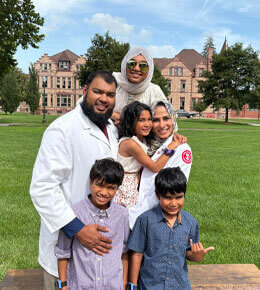
Ask Sadaf Cassim where she thought her life would end up 10 years ago, and you might get a markedly different answer than where she’s at now. The title of “first-year medical student” was recently added to her already robust repertoire of expert mother, professional kid-wrangler and Kempo Karate brown belt.
Originally from the Chicagoland area and having achieved her B.A. in communications at Benedictine University, Cassim always had a love for the sciences. She met her husband and the two of them started his journey through medical school during the 2008 recession. The birth of their first child pulled her into the position of a stay-at-home mom, but time would eventually bring her back to medicine. Nearly a decade later, with her family’s encouragement, she began her journey towards physicianhood.
“I knew that, in order to be the best version of myself for my family, I would have to pursue my own dreams on a path that brought me happiness,” Cassim explains. “Medicine was always the original dream and with my husband as a practicing physician, it was a no-brainer.”
When asked to describe her first few weeks of medical school, Cassim laughs. “It was like being violently thrown into a turbulent ocean when you don’t know how to swim and people are calling out, ‘Don’t worry! You’ll learn to swim in no time!’ But magically, it does get better.”
Before she knew it, she was studying glycolysis and learning the nerves of the brachial plexus. Though Pillar 1 has not been without its challenges, she says her non-traditional background has allowed her to see the bigger picture and not stress over details.
“I value balance,” she explains. “While my studies are very important, there are other things in my life that take equal priority, such as my children. My approach to learning medicine is learning how to do both and do them well.”
Being a full-time mother and full-time student is no easy task, but Cassim is the type of person to excel in both. In the lessons she’s learned and hopes to pass on, she reminds other non-traditional students to stay true to themselves.
“Don’t necessarily do what everyone else around you is doing, do what works for you,” she encourages. “You may have to approach things differently and that’s ok.”
You can catch Cassim spending time with her family and fostering her connection to nature. Whether it’s making soaps, lip balms or studying in the anatomy lab, she’s proof that no matter the path, dreams can always come true.
Amy Ortiz
Class of 2027
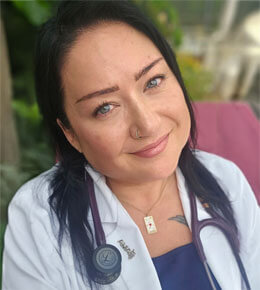
You may have seen Amy Ortiz’s face on the side of a NASCAR racecar or when you got your hair styled for a wedding, asked to speak with the manager at your favorite restaurant, tried on your cute new chic outfit at a retail store, or even had your blood drawn at the hospital in Rapid City. Ortiz has lived about a thousand lives, but her proudest achievement has been raising her now 22-year-old daughter, Aliyah.
“My biggest role since 2002 has been mom to my daughter, Aliyah,” she says proudly. “I was ‘mom’ first and raising her has been the most fulfilling chapter of my life.”
Ortiz’s interest in medicine started long before any of these experiences. Back when she was a kid growing up in Alaska, Ortiz had two goals: become a doctor and mush in the Iditarod Trail Sled Dog Race. Those dreams took a detour after tragedy struck at age 17, when her father passed from a cerebral hemorrhage.
“He became an organ, eye and tissue donor,” Ortiz says. “I even got to meet the man who received his heart. That’s why I have a tattoo of an anatomical heart on my forearm with a banner across it that says ‘Dad’.”
In the years that followed, Ortiz shied away from practicing medicine as it was a reminder of the ailments that could befall people she loved. Still, she channeled her energy into advocacy for organ and tissue donation, speaking and volunteering with the Nevada Donor Network.
“It was a way to help me feel like I was staying close to my dad, talking about the legacy he left behind,” she shares.
Following a myriad of jobs over the years, an unexpected twist of fate rekindled Ortiz’s interest in medicine after receiving a spinal fusion with donated bone tissue herself. Curious about how it all worked, she enrolled in an anatomy and physiology course at a community college, and she was hooked.
A few years later while sitting in on an appointment with her mother and stepfather, both recently diagnosed with cancer, her path to medicine was further solidified. Watching their family physician walk them through every detail of care and comfort was transformative.
“I thought, ‘This is it. This is what I want to do!’” Ortiz says. “While it took me longer than I planned as a child, I think the path that I took, running away from medicine, only to have life guide me not-so-gently back, is going to make me a better doctor.”
Ortiz shares that her nontraditional path will create a more holistic approach regarding her patients. She’s had more time to discover who she truly is and she hopes other students who took the scenic route recognize the same strength in themselves.
“We talk about kindness as a practice just as medicine is a practice,” Ortiz explains. “With more years of life lived, I’ve simply had more years to practice.”
When she’s not at the clinic, you can find Ortiz studying comfortably next to her indoor koi pond with its eight large koi fish, riding four-wheelers through the forest, gardening, visiting baby buffalo and begging burros at Custer State Park, or cheering on her daughter in whatever adventure comes next. We have no doubt she will be a doctor, and who knows, maybe one day we’ll see her dog sledding through the Alaskan snow, too.
Parker Owen
Class of 2027
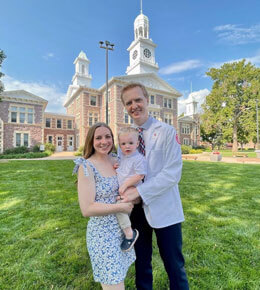
When Parker Owen’s mother asked him what he wanted to be when he grew up, he proudly declared what he knew to be his inevitable destiny: “professional video game player.” Unfortunately (or fortunately, depending on your perspective) that dream quickly faded into concrete and sawdust once he began full-time at a local construction company installing utility lines. His first job as a laborer introduced him to long days, hard work, and the importance of reliable infrastructure, the unseen systems that quietly keep communities running.
In another chapter of his life, he dove into the world of economics, earning a bachelor’s degree from Augustana University and developing a passion for the ideas that shape societies. He can still easily weave webs of markets, incentives and historical economic theory with his words, exploring blueprints of entrepreneurship and engineering theses on supply-demand chains. But today, he’ll tell you his greatest joy isn’t theoretical. It’s his wife, Erin, and their four-year-old son, Scotty.
Owen’s love for medicine found its foundation as his life stepped onto unsteady ground. His mother’s diagnosis of gastric adenocarcinoma introduced him to the world of oncology, and with it, the complexities and grief of watching a loved one experience illness. While walking with her through appointments and witnessing her care, he saw the deep influence physicians have, not only on their patients, but on family members and friends.
“I still remember how her health care team made her feel comfortable and at ease with complex, difficult-to-comprehend plans,” Owen shares. “It was impossible to not be enamored by the incredible work these teams did.”
Eventually, he stepped into health care himself as a patient care tech at Avera McKennan, an experience that would shape how he now views teamwork and the human side of medicine. Additionally, with his background in economics, he would often be faced with thoughts on how costly a single medical decision can be for patients and hospital systems.
His perspective on finances and health care costs gives him a unique perspective on patient care and treatment, enabling him to consider his patients’ financial wellbeing and how his work fits into the larger hospital framework as a business. But no matter the considerations of profit and loss, Owen considers compassion paramount.
“I want to think I've always known how important kindness and patience are,” he says. “But with every year, I find myself valuing these two traits even more.”
With kindness and patience as core values, Owen embarked on his medical school journey with wide eyes and a deep sense of gratitude. When asked about his first days in medical school, he described a feeling less as imposter syndrome, and more of stunned disbelief.
“I didn't feel like an outsider or as though I didn't belong,” he admits. “I was more in shock that this journey was actually beginning and that I found myself as one of the few privileged who get to step foot on this path.”
The balancing act of managing lectures, research and exams while making sure his son felt supported and loved was quickly learned. Having a little one at home, Owen was determined to structure his days so that school didn’t overshadow family, and family didn’t derail his studies. Every choice is a negotiation, every hour intentional, and he strives to keep both worlds present without letting one bleed into the other.
Outside the classroom, you’ll find Owen exploring the outdoors with Erin and Scotty while hiking at Great Bear, camping at Newton Hills, or backpacking through national parks. And, occasionally after everyone else is off to bed, you may find him honing his craft of one day being a professional video game player.
Beck Hofer
Class of 2027
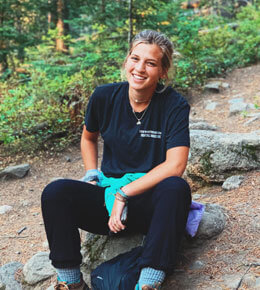
If you ask Beck Hofer where her path to medicine began, she might tell you it started in the suburbs of Chicago, where her Italian roots run deep and where she double majored in international politics and Mandarin Chinese at Wheaton College. With dreams of foreign service and international policy work, she imagined a life advocating for underserved communities across the globe. However, she became increasingly frustrated by the red tape and limitations she encountered and wanted a more tangible way to help people.
“I took a medical anthropology class where I read some of Paul Farmer’s work. He inspired me to reconsider medicine as a career,” Hofer shares. “With both parents and a sister as physicians, medical school was always an option, but I kind of ran away from it. I wanted to make my own path.”
Her path didn’t lead directly to school. After an initial rejection from medical school, Hofer worked as a shelter advocate in a domestic violence program, providing safety planning, court accompaniment and trauma support for survivors. She later transitioned to a residential psychiatric facility specializing in eating disorders and eventually became a program manager at the sister unit down the street. Those three years immersed her in the realities of pain, healing, resilience and the human capacity to grow beyond grief.
“I found myself drawn to people who were experiencing trauma and pain, both psychological and physical. I realized helping people heal was my calling,” she says.
Drawn back to medicine after her time working, she reapplied to medical school and was accepted, moving back to South Dakota. The first week was overwhelming enough to make her nearly cry over mispronouncing the word “sagittal” at the dinner table.
“My dad would later tell me he was thinking to himself, ‘Can she do this? She can’t even pronounce the words,’” she remembers.
The first week of each system block was a crash course on everything she’d never learned. But professors taught with compassion, anatomy TAs became lifelong friends and she survived. Slowly, knowledge accumulated like sediment building something solid.
“There are many times I still have to check myself for insecurity, over-competitiveness, and perfectionism, but I think I’ve found a bit of a balance,” she says. “I’ve fostered confidence and intentionality as well as fleshed out my own learning style. Plus, I have a wonderful cohort of classmates and friends who have helped me through!”
Some days she feels like she’s thriving; other days she’s simply held together by willpower and whatever snack she remembered to pack. In the messiness of training to become a physician, she holds tight to family, to the laughter that keeps everything from getting too heavy, and to the reminder that someone back home always knows she’s doing better than she gives herself credit for.
When she isn’t studying, Hofer stays active snow skiing and wake surfing, or she channels her creativity through painting, reading and creative writing. Whether she’s designing poster presentations or watercolor birthday cards, creative work is her way of losing track of time in the best way.
Molly Lien
Class of 2026
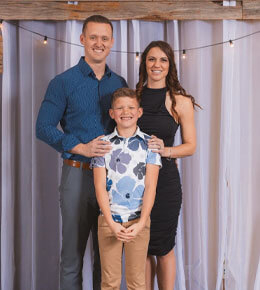
Molly Lien has never taken the easy road. It happens to be something she’s very proud of.
Her journey to medical school began long before anatomy labs and night shifts. It started her freshman year at USD, balancing classes, morning nausea and a long-distance relationship with her high-school sweetheart, Austin. When she learned she was pregnant with their son, Cooper, she feared her path to medicine had ended.
“I thought my dream of becoming a physician was over,” Lien recalls. “But with support and determination, we adapted.”
Her husband transferred schools, the pair coordinated prenatal care from Sioux Falls, and they attended classes virtually. She continued college without taking formal maternity leave. In fact, she completed her persuasive speech from her hospital bed to the nurses the day her son was born. This moment was a preview of the determination that would define her path.
The young family later moved to Grand Forks, where both parents worked and took full-time classes, all while raising their son independently. Additionally, Lien stayed active in student organizations, joined a sorority and maintained strong academic performance.
“I was determined not to lose out on the college experience,” she explains.
After graduating, following another flexible move and transfer to University of Minnesota–Twin Cities due to her husband beginning chiropractic school, she landed what she thought would be a one-year dermatology clinic job. Instead, she spent five transformative years there.
“Not only was I able to get hands-on experience, I advanced into leadership, managing 50 employees, helping build new clinics and overseeing operations, which gave me experience in project management, administration and even clinic design,” she says.
Even still, her passion was found in patient care. It took two application cycles, but she earned her acceptance to the USD Sanford School of Medicine. The first week of medical school brought equal parts excitement and fear, but long nights of studying slowly chipped away at the doubt and built her confidence.
“Over time, medical school shifted from overwhelming to empowering—I proved to myself that I could succeed in this dream,” Lien shares. “Now, with seven months to graduation, I can look back with pride on a journey that was anything but easy, but one that made me resilient and deeply grateful for the opportunity to become a physician.”
When Lien isn’t running around the hospital, she may be cozy at home with her family, two golden retrievers and a flock of chickens—where life feels slower, calmer and rooted in community. However, she is most likely behind the wheel chauffeuring Cooper to hockey, football, basketball, golf, track or archery. If you’re wondering where to find her, check the bleachers. She’ll be the mom cheering the loudest, with her Anki cards pocketed away in her phone, quietly proving again and again that some paths may deviate from the mapped course, but they still lead to medicine.
Aaron Fest
Class of 2026
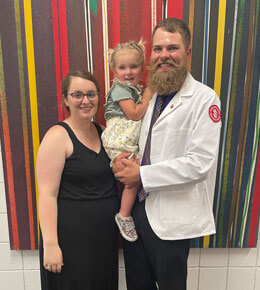
Father. Husband. Vinyl collector. Former ICU nurse. Beard enthusiast. There are many ways to describe Aaron Fest and his passions. With a multitude of skills and hobbies, Fest seems like a man who can do it all. However, when asked about his path as a non-traditional student, one theme emerges among the rest: balance.
“I had ruled out medicine early on,” Fest discloses. “I had doubts as to whether I was smart enough to finish the training it would take to become a physician. I also wasn’t sure that I could become a physician and be the family man that I wanted to be.”
Having worked in emergency services, intensive care units and post-anesthesia care units, Fest had more than his fair share of exposure to health care before starting medical school. He always knew he wanted to pursue some form of higher education after receiving his RN degree but envisioned himself more as a nurse practitioner or certified nurse anesthetist rather than a physician. When the global pandemic hit in 2019, his perspective on what his life could be began to change.
“I realized that I wanted more advanced training,” he says. “I talked with physicians who appeared to be family-oriented individuals while still being successful physicians. I decided I needed to at least try to get into medical school because if I didn’t, I may have regretted it.”
With the support of his family, Fest applied and was accepted into the USD SSOM. He remembers his first days of school fondly, excited to shift his focus on school and school only after having balanced a post-baccalaureate program, studying for the MCAT, and applying to medical school all while still working and fulfilling his role as a husband and father. While he says he’s not quite as “bright-eyed and bushy-tailed” as he was at the beginning, his passion for people, science and medicine remains.
“I wouldn’t have changed anything in the past three years,” he declares. “The different aspects are all going to shape who I will be as a physician someday.”
Fest also describes his dual duties as medical student and father as somewhat symbiotic in the most unexpected ways. While balancing family responsibilities and intensive studies wasn’t always easy, he found his study style and experiences adapted with practice.
“For me, it wasn’t abnormal to be awake with my daughter in the middle of the night, feeding her a bottle while watching Sketchy videos or doing Anki cards,” he explains. “Other people looked at me like I grew a third eye when I told them I’d do that.”
Fest's 3 a.m. study sessions with his daughter taught him an important lesson: not a single person has the same path through medical school. Throughout the years, he’s cultivated adaptability, balance and discernment to take what works and leave the rest. He takes the lessons he’s learned and tries not to make the same mistakes twice.
“I build relationships with patients now in the same way as I did as a nurse, treating every relationship with dignity and humility,” he reflects. “Every chance I have to interact with a patient is a privilege.”
You can find him cycling on the bike trail, spending time with his wife, daughter and chocolate lab, and scouring local thrift stores for deals on vinyl records. Though he may never stop balancing the roles of father, husband and future physician, his steady focus on what matters most keeps him grounded. And though he needs to keep it trimmed while on surgical rotations, he may one day achieve his dream of growing a “terminal length” beard.
Jonathan Gruba
Class of 2026
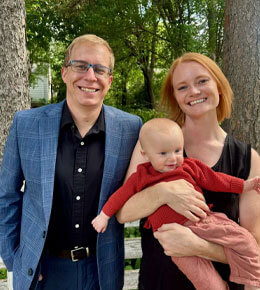
Near the shores of Pickerel Lake in northeastern South Dakota, a small K-12 school graduates 14 students each year. One of those students, Jonathon Gruba, grew up with a sense of adventure that could hardly be contained. Whether it was flying planes at 18, getting a certified scuba license, or joining a mixed martial arts club, he’s always on the lookout for his next tale to tell.
A South Dakota State University graduate, his passion for airplanes initially dominated his education, pursuing a degree in aviation. However, he discovered his love for global travels soon after and pivoted to Global Studies with minors in Spanish and Business. After graduation, his path went everywhere at once in search of something that would stick.
“After undergrad, I spent a lot of time exploring and moving around, working in many different areas, including home construction (family business), background investigations, a ski instructor in Colorado, and even substitute teaching at a middle school, among others,” Gruba shares.
The thing that did stick ended up being health care. Receiving a master’s degree in public health-emergency management and a certificate in public health, Gruba’s love for global and public health let him explore the people-oriented side of medicine while studying communities and their needs. Several professional roles focused on hospital disaster preparedness and responses followed that, with positions as a program coordinator for a non-profit and finally, as a regional emergency manager for Fairview Health.
Gruba’s interest in medicine and global studies converged when he spent four and half months in Tanzania conducting research on squamous cell carcinoma of the conjunctiva. The experience instilled a desire to study disease processes and treatment more deeply. Years later, at Fairview, he worked shoulder-to-shoulder with medical directors and physicians and that early curiosity returned with clarity.
“Although I enjoyed my current work, I realized I was missing something. I had hit the target with health care, but the bullseye seemed to be becoming a physician,” he recalls.
The decision to apply to medical school was made over Christmas of 2019 and was further solidified in his decision a few months later as he handled Fairview’s initial COVID-19 response. Returning to the classroom after years in a career felt strange at first. On the first day, he was very aware that he was the oldest in the room.
“The biggest shift came when we transitioned from the classroom to clinical rotations. The hands-on work felt more natural, like I’d stepped into something familiar,” Gruba says. “Having worked across several industries, I also had more opportunities to find common ground and connect with patients.”
Of course, arrival at this point didn’t come without challenges. Having a family during medical school adds layers of complexity that can’t be put on hold.
“It will also test your ability to manage time and balance competing priorities. You become more efficient and learn to enjoy some of the smaller moments,” he says. “From my experience, it’s not so much the age but rather being realistic about where you are in your life and understanding your personal and family’s expectations during training, including what you may need to sacrifice during the long commitment of becoming a physician.”
Beyond medicine, Gruba still lives broadly. He continues to use his private pilot’s license, even joining the Civil Air Patrol and participating in intercept missions with the local Air Guard. When he’s near an ocean, he’ll be underwater with a scuba tank; when he’s near mountains, he’ll have a snowboard strapped on. Every day and detour is a new adventure for him.
Sean McCann
Class of 2026
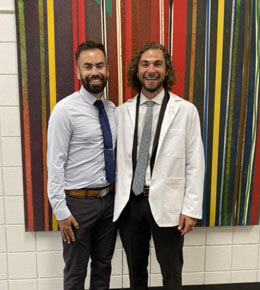
If you drive far enough into western South Dakota, you’ll find Newell, a rural town where graduating classes barely reach 20 students and everyone knows the story behind each porch light. That’s where Sean McCann grew up, already imagining a future in medicine even if he couldn’t name the exact role yet.
“Medicine, in general, was always an interest of mine,” McCann shares. “There wasn’t some huge life event or catalyst that drove me to the field or made it my ‘calling.’ It was just something that I always wanted to do.”
After heading to USD for his undergraduate degree, he initially pursued the physician assistant path. When that application didn’t pan out, he didn’t quit. He pivoted. Thinking of applying to nurse practitioner school, McCann spent nearly four years working as a phlebotomist and later returned to school for an accelerated nursing program. As an emergency room nurse, he thrived in the controlled chaos of trauma activations, rapid decision and teamwork that felt almost choreographed. It was in the ED where he finally decided to apply for medical school.
“It was one of my mentors in the ED who was working on finishing his NP degree and would say how he wished he had more training and a larger scope,” McCann explains. “I figured at that point if I was going to go back to school again, I had better make sure it is for something that I really want to do and wouldn't feel limited in any way.”
Before starting medical school, McCann checked off a few major life milestones: adopting his dog, Annie, getting married, buying a house and visiting cities across the United States. Then the first few weeks of medical school arrived, buzzing with energy. After years away from the classroom, even quizzes felt novel. It was a different kind of pressure than the ED.
“It was also crazy to me that I got to a point where a 30-question quiz on a Monday morning gave me more anxiety and loss of sleep than doing chest compressions or managing a trauma, even though I knew objectively my work in the ED had way more long-term consequences than my quiz grades,” McCann exclaims.
For McCann, being a non-traditional student has its advantages. He knows what employers expect, what it feels like to be a new member of a health care team, and what a physician’s day-to-day reality actually looks like. It also means he has colleagues who will finish training years younger than he is now, a reminder that sometimes the “normal timeline” is a myth whispered among fellow students.
Looking ahead, he hopes that his years on the other side of the stretcher will shape the physician he becomes. He’s seen how much unseen labor keeps a hospital moving and how every role is threaded into good patient care.
“For me at times, it’s a good reminder of why what I’m doing now is so important. I can think back on my ‘previous life’ and use it as motivation to keep working hard,” he says.
These days, when he’s not studying, you’ll likely find McCann and his husband in the gym, traveling to a new city, or planning their next wine tasting itinerary.
You May Also Like

Health Policy and Physician Leadership Course Provides Advocacy Skillset
Health policy shapes nearly every aspect of clinical practice, from patient access to care to treatment options and affordability.

USD Knudson School of Law Graduate Aidan Mullaney Honored with Pro Bono Service Award
Aidan Mullaney, J.D., a 2026 University of South Dakota Knudson School of Law graduate, was recognized with the William F. Day Jr. Law Student Pro Bono Award at the South Dakota State Bar Convention.

USD School of Education Students Charter Chapters of Two National Organizations
The University of South Dakota School of Education is the first institution in the region to establish both an Educators Rising Collegiate Chapter and an Aspiring Educators Chapter, expanding opportunities for future teachers to develop leadership skills, professional networks and a deeper connection to the teaching profession.
